How many sessions are needed for laser hair removal in Tunisia?
Why one session is not enough, how to space appointments, and what really influences results.
Before starting laser hair removal in Tunisia, almost everyone asks: “How many sessions will I need?” A simple answer with a definite number and precise schedule would be reassuring.
LECTUREDecision guideWhy one session is not enough, how to space appointments…
GYNÉBELLEInformation before treatmentnumber of laser hair removal sessions Tunis
GYNÉBELLE · MEDICAL NEWS
GYNEBELLE / MEDICAL NEWS / ARTICLE 001
INTERACTIVE · START HEREChoose your question
01 / UNDERSTANDING THE SUBJECT
The question at the heart of this article
Before starting laser hair removal in Tunisia, the question almost always arises: “How many sessions will I need?” A simple answer with a reliable number and exact schedule would be reassuring.
The reality is more nuanced. Effectiveness depends on the area, hair type, pigmentation, skin phototype, and sometimes hormonal factors. “Permanent” refers to long-lasting hair reduction, not a promise of being completely hair-free for life.
GYNÉBELLE in Ennasr 2, Ariana, has ICE 4 Waves diode and Nd:YAG 1064 nm lasers, among other equipment. The number of sessions is estimated after examination and may be reassessed as treatment progresses.
MEDICAL EXPLANATION · GYNÉBELLE
Why there is no magic number of sessions
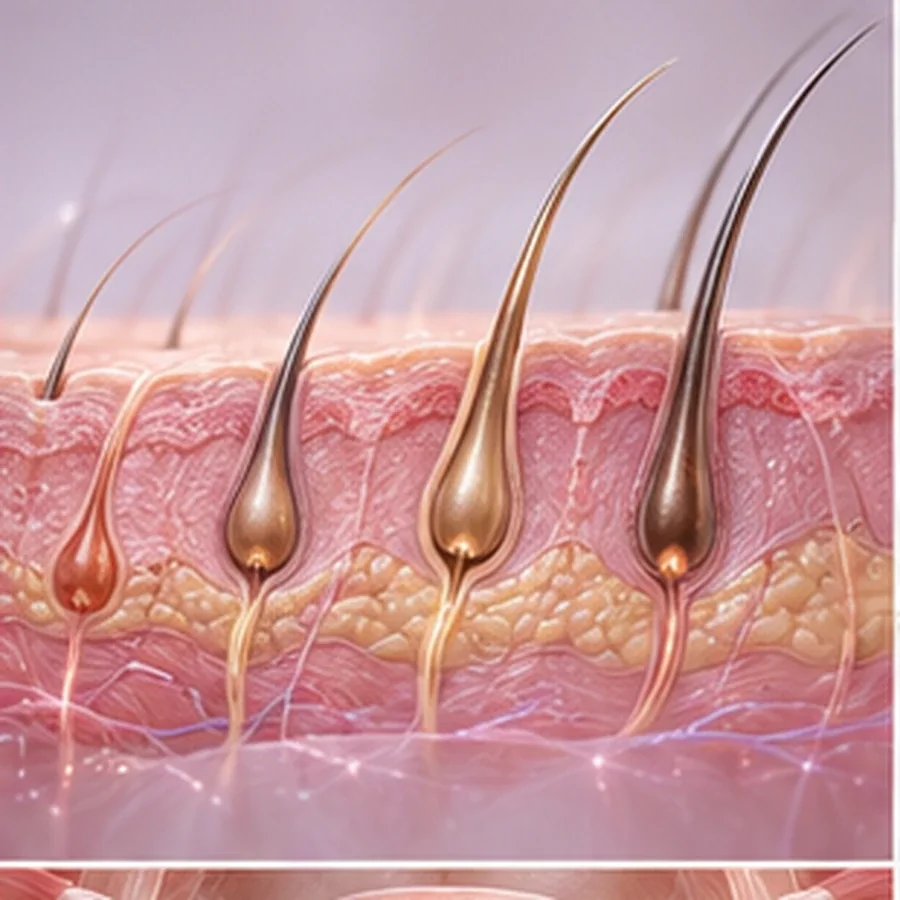
Not all hair follicles are in the same growth phase at the same time. This is a major reason why several sessions are generally required. The number of sessions, intervals, and potential maintenance also depend on the area, skin phototype, hair type, and hormonal factors. In Tunisia, a suitable schedule is established after assessment; a standard package alone does not guarantee results.
02 / THE PRINCIPLE
Why are several sessions needed?
Laser mainly targets pigmented structures in hair follicles during the growth phase. However, hairs within one area do not grow synchronously. Several sessions at appropriate intervals are therefore needed to target different groups of follicles.
The American Academy of Dermatology describes a series of treatments, often around six or more depending on the circumstances. This is general guidance, not a package suitable for everyone.
GYNÉBELLE / KEY POINT
Why are several sessions needed?
Laser mainly targets pigmented structures in hair follicles during the growth phase. However, hairs within one area do not grow synchronously. Several sessions at appropriate intervals are therefore needed to target different groups of follicles.
The American Academy of Dermatology describes a series of treatments, often around six or more depending on the circumstances. This is general guidance, not a package suitable for everyone.
Bikini area, underarms, legs, face: the timing varies
Leg hair does not behave in the same way as facial hair. Hormone-sensitive areas may show more regrowth or require maintenance sessions. The bikini area and underarms also need an assessment tailored to the skin and hair density.
Regarding treatment frequency, the AAD often gives intervals of around four to six weeks as a guide, but the physician adjusts the schedule to the treated area and observed regrowth.
“
Why one session is not enough, how to space appointments, and what really influences results.
04 / BEFORE DECIDING
How do you choose between ICE diode and Nd:YAG?
The two lasers do not have exactly the same settings or application profiles. GYNÉBELLE presents the ICE 4 Waves diode and the Nd:YAG 1064 nm, whose suitability varies with skin phototype and hair characteristics.
The Zimmer system can improve comfort during certain sessions. Device choice is not based on watts alone: settings and practitioner expertise matter more.
05 / REAL-LIFE SITUATIONS
When can we tell whether treatment is progressing well?
After each session, changes in regrowth and hair texture are monitored. It is important to allow time for the hair cycle and to follow instructions before and after laser treatment. The goal is lasting reduction, with results that vary individually.
At GYNÉBELLE, the consultation helps estimate a realistic course of treatment for the face, body, or bikini area and then adjust the number of sessions according to the response.
Guidelines and studies worth knowing
The American Academy of Dermatology describes the gradual nature of laser hair removal, the need for a series of sessions, and the possibility of regrowth requiring maintenance.
The same source emphasizes the importance of medical expertise appropriate to skin phototype in reducing the risk of burns or discoloration.
Choose a step below. The explanations change without providing a diagnosis.
Which aspect would you like to understand first?
Choose the situation closest to yours. The guide displays relevant information, equipment related to your question, and a page to explore. It does not replace a consultation.
STEP 1 / YOUR CONCERNChoose a situation
SUGGESTED READING
Why are several sessions needed?
Laser mainly targets pigmented structures in hair follicles during the growth phase. However, hairs within one area do not grow synchronously. Several sessions at appropriate intervals are therefore needed to target different groups of follicles.
number of laser hair removal sessions Tunislong-term laser hair reduction Tunisiabikini-area laser session count
This article presents only equipment related to the issue discussed. Select a technology to understand its role.
Equipment relevant to this feature
GYNÉBELLE's seven devices are not designed for the same concerns. Select a device to learn about its actual role. The photographs shown come from GYNÉBELLE's pages.
Would you like to know how many sessions may be required for your skin? A GYNÉBELLE consultation can help estimate a realistic protocol and schedule.
Dr Ines Ben Hassen Hached contributes to GYNÉBELLE's gynecological and intimate care pathway when a concern requires specialist assessment. The location and arrangements for any possible procedure are clarified according to the intervention.
Booking a consultation does not commit you to a treatment session or surgery. The first step is to understand the options appropriate to your situation.