01
Muscle strengthening
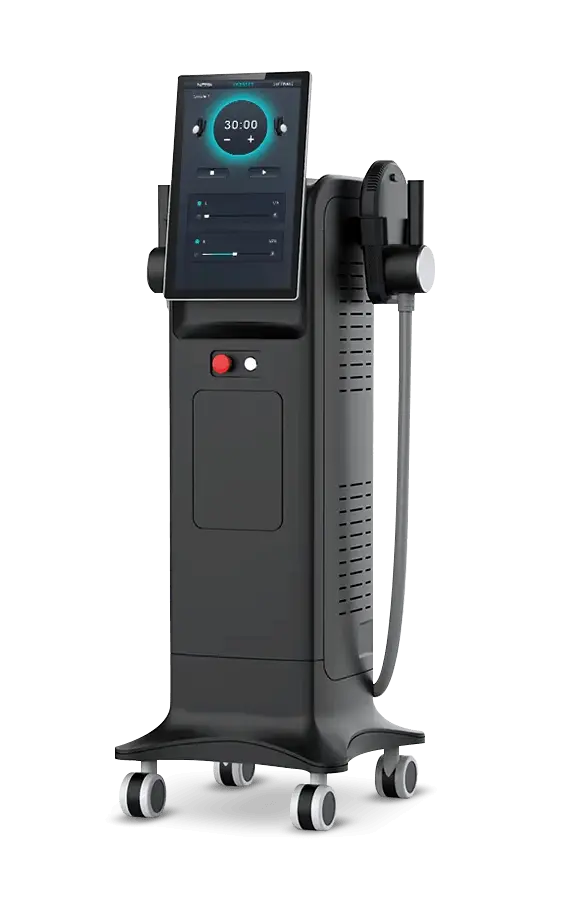
Muscle strengthening is one aim of SCULPT ELITE. It addresses targeted training goals: regaining a sense of muscle tone, engaging a specific region or supporting muscle definition.
Before suggesting a program, it is important to clarify the desired improvement. Someone returning to exercise, a postpartum patient and an athlete seeking to complement training may have different needs.
Define a goal before sessions
Assessment considers the target area, activity level, medical history and possible symptoms. It distinguishes aesthetic concerns from weakness requiring evaluation or rehabilitation.
Follow-up relates to the agreed goal: perceived changes, tolerance and suitable measures. A muscle's appearance, strength and function must not be confused.
02
Body contouring
Body contouring concerns the outline and appearance of an area: abdomen, buttocks or another region compatible with available applicators. It is not simply a change in weight.
Muscle development, fat thickness, skin quality and posture all influence appearance. Consultation helps distinguish these components.
Choose a goal consistent with the area
You might want better contour definition or feel that an area lacks tone. State this before discussing a program, alternatives and limitations.
Progress should be assessed using agreed measures in comparable conditions. A single photograph or measurement cannot explain every observed change.
03
Reduction of subcutaneous fat
Subcutaneous fat is the layer of fatty tissue beneath the skin. A concern about its thickness differs from wanting to tone the underlying muscle.
Assessment identifies what contributes to volume: fat tissue, skin laxity, muscle characteristics or another cause requiring examination.
Verify the device's mechanism
Not every muscle stimulation device is indicated for fat reduction. Results from a device combining several technologies cannot automatically be applied to another machine.
For SCULPT ELITE, this goal must be checked against technical documentation, authorized areas and protocol evidence.
04
Postpartum muscle weakness treatment
After pregnancy, muscle training concerns may relate to the abdominal wall, a sense of reduced tone or difficulty regaining body awareness.
Time since birth, mode of delivery, possible cesarean section, wound healing and symptoms must be assessed. No universal return-to-treatment schedule is specified.
Distinguish abdomen from pelvic floor
Abdominal weakness, diastasis recti, possible hernia and urinary leakage are different problems. Assessment guides appropriate care.
The role of SCULPT ELITE, if relevant, needs discussion alongside rehabilitation and return-to-activity needs. See also our page
ALURA and pelvic floor
.
05
Fat reduction
Fat reduction concerns may involve localized deposits or an overall weight goal. These should be distinguished at the first appointment.
For a localized concern, consultation examines the goal, nature of the volume and device capabilities. Overall weight-loss goals cannot be reduced to a single-area procedure.
Localized reduction and weight loss
Muscle training and fat reduction are different. Changes in body shape do not prove that a particular quantity of fat has been removed.
Assessment must clarify which effects are documented for the model, along with alternatives.
06
Toning and firming
Toning and firming are common goals: feeling an area is more supported, better defined or less lax. These terms must connect to what is actually assessed.
Muscle firmness and skin tension are different components. A mainly muscular goal is not assessed like excess skin, stretch marks or scars.
Identify the priority: muscle or skin
Consultation considers the role of muscle training without automatically attributing correction of every type of laxity.
If skin is the main concern, another approach may be preferable. Having several devices does not remove the need for specific indications.
07
Improved blood circulation
Blood circulation needs precise definition. A local temporary effect associated with some technologies is not the same as treatment for vascular disease.
The indications for some stimulation devices may include a local effect. This depends on documentation and cannot be attributed to every device.
Do not replace vascular assessment
Heaviness, swelling, pain or circulatory discomfort should be described to a professional. They are not automatically cosmetic indications.
For SCULPT ELITE, the centre must check whether the goal matches the model's intended uses and your circumstances.
08
Calorie expenditure
Calorie expenditure is different from muscle stimulation, a sensation of effort or visible changes. These are not interchangeable measurements.
A stated number of contractions does not allow calculation of individual energy expenditure or conversion of the session into running minutes.
Use figures only when applicable
Calorie claims require measurements relevant to the device, settings and conditions studied. They cannot be borrowed from another machine.
It is therefore useful to clarify whether your aim is appearance, muscle training or general weight loss.
09
Targeted muscle training
Targeted muscle training starts with a question: which area do you want to work on and why? The answer distinguishes aesthetic definition, tone and functional concerns.
Applicator choice, placement and settings must follow model indications. An area you want treated is not automatically an authorized area.
Integrate the program into your activity
If you already exercise, describe how often, which muscle groups and your primary goal. This helps discuss how the program might fit.
Follow-up focuses on area response, tolerance and measures agreed before sessions.
10
Recovery and rehabilitation
Recovery may mean returning after a break, fatigue from activity, injury or surgery. These contexts do not necessarily follow the same protocol.
Before discussing SCULPT ELITE, symptoms and goals need clarification. Pain, limitation or deficit require appropriate assessment.
Distinguish aesthetic use from medical indication
A device intended to stimulate healthy muscles is not automatically approved for rehabilitation. The model and documentation determine its uses.
If rehabilitation is ongoing, any added program should be discussed with the professionals involved and follow their precautions.
11
Improved endurance
Endurance can mean a muscle's ability to repeat exertion or the ability to sustain overall activity. These goals must be distinguished.
Someone wanting to tolerate activity better does not necessarily have the same needs as a patient seeking better definition.
Define a measure of progress
Assessment should identify what will be monitored and the device's actual role. Feeling contractions does not establish functional progress.
Activity, gradual return and individual factors affect how perceived changes are interpreted.
12
Improved athletic performance
Athletic performance must relate to a sport. Strength, speed, endurance, coordination and technique are different goals.
For an athlete, assessment considers level, activity schedule, medical history and possible pain.
Do not confuse appearance with performance
A perceived change in body contours or firmness does not prove better performance. This requires specific measures.
The possible role of SCULPT ELITE is discussed separately from technical training, physical preparation and recovery.
13
Flexibility and posture
Posture concerns may include stiffness, weakness or imbalance. They must be described before choosing a program.
Mobility, motor control, habits and individual characteristics contribute to posture. It cannot be reduced to activation of one muscle.
Identify additional needs
Assessment distinguishes aesthetic goals, mobility concerns and the need for functional evaluation. Another approach may be better.
Pain, persistent limitation or recent changes warrant evaluation of their cause, rather than promises of correction through stimulation.