Stress incontinence
Leakage occurs when coughing, laughing, running, jumping or lifting an object.
At GYNÉBELLE in Ennasr 2, Ariana, Greater Tunis, you can consult about urinary leakage. Assessment helps distinguish stress incontinence, urge incontinence and mixed incontinence, then discuss options appropriate to your circumstances.
Whether leakage occurs after childbirth, at menopause or at another stage of life, symptoms interfering with daily activities deserve discussion during a consultation.
Ennasr 2 · Ariana · Greater Tunis, Tunisia
Understanding symptoms
Leakage occurs when coughing, laughing, running, jumping or lifting an object.
Leakage is preceded by a sudden, hard-to-control urge. It may be accompanied by frequent trips to the toilet.
Leakage occurs with physical exertion and sudden urgency. Assessment helps determine which symptoms are most troublesome and where to start.
Consultation in Ennasr 2
The physician asks how long leakage has been occurring, its frequency, triggers, impact and relevant history: childbirth, pelvic surgery, medication, constipation and pain. Depending on the circumstances, assessment may involve an examination, evaluation of pelvic-floor contraction and urine testing. Further tests or specialist referral may be suggested if needed.
A bladder diary kept for at least three days can help document symptoms. Record drinks and urination times, urgent sensations, leakage and when it happens.
Blood in urine, fever with urinary symptoms, significant pain or inability to urinate require prompt medical attention.
First-line care
For stress or mixed incontinence, supervised pelvic-floor muscle training is recommended first-line for at least three months. Supervision helps teach the correct contraction and adapt progression to your abilities.
For urgency or mixed incontinence, bladder training for at least six weeks can be offered as first-line care. If symptoms persist, the physician reassesses the type of leakage and may discuss additional treatments or specialist referral.
Pregnancy and postpartum
Leakage when coughing, laughing or exerting yourself can occur during pregnancy or after birth. A sudden, difficult-to-resist urge represents a different symptom pattern. Identifying when symptoms began and the circumstances helps choose care.
The weight of the uterus and pregnancy-related changes place demands on the pelvic floor. If leakage develops or worsens, tell the midwife or physician monitoring your pregnancy. Explain whether it happens with exertion, urgent need to urinate or both.
For stress or mixed incontinence, NICE recommends supervised pelvic-floor exercises for at least three months, including during pregnancy. The priority is to discuss leakage with your prenatal care professional so exercises can be tailored.
Assessment considers time since birth, mode of delivery, possible tear or episiotomy, cesarean section, healing and pain. The clinician may also investigate pelvic heaviness or difficulty contracting or relaxing the pelvic floor.
If leakage persists or bothers you, raise it at your postnatal appointment. A three-day diary can record leakage, its circumstances and urgent sensations. Seek prompt medical advice if you cannot urinate, have fever with urinary symptoms or significant pain.
During pregnancy · Prevention
Among pregnant women without leakage at baseline, exercises started during pregnancy reduced the risk of reporting leakage late in pregnancy compared with usual care. Cochrane: 6 trials, 624 women. RR 0.38 (95% CI: 0.20–0.72).
More than 3 to 6 months after birth · Prevention
In the same review, for exercise begun during pregnancy among women initially without leakage. Cochrane: 5 trials, 673 women. RR 0.71 (95% CI: 0.54–0.95).
Rehabilitation started after childbirth
Another review found 37% lower odds of leakage after pelvic-floor exercises during the first postpartum year compared with control groups. 7 trials, 1,930 participants, 95% CI: 0.41–0.97.
The first two figures relate to prevention in women who did not have leakage at baseline. Evidence is less certain for treating existing leakage during pregnancy or persistent leakage long after childbirth. An odds ratio is neither an absolute risk reduction nor a cure rate. These studies assess pelvic-floor exercises.
Study results
These studies concern stress urinary incontinence. Each row compares groups within the same analysis and uses its own outcome measure. Percentages from different rows cannot be used to compare treatments directly.
| Study and outcome measure | Groupe actif | Control group |
|---|---|---|
| Pelvic-floor rehabilitation: self-reported resolution of symptoms at the end of treatment. Cochrane review, 4 trials, 165 women. | 56 % (46/82) | 6 % (5/83) |
| Pelvic-floor rehabilitation: self-reported resolution or improvement of symptoms. Another Cochrane analysis, 3 trials, 242 women. | 74% (88/119) | 11% (14/123) |
| Pulsed magnetic stimulation: decrease of at least 5 points on the ICIQ-UI SF questionnaire after two months. Trial by Lim et al., 120 women. | 75 % (45/60) | 21.7% (13/60) |
In the Cochrane analyses, the control group received no active treatment. In the magnetic stimulation trial, the control group received a sham procedure. A lower score indicates improvement according to that trial's measure; it does not necessarily mean leakage has stopped.
Trials of magnetic stimulation show conflicting findings. European Association of Urology (EAU) guidelines advise against electromagnetic stimulation for stress incontinence outside supervised clinical research. The Lim et al. trial cannot establish a success rate for GYNÉBELLE's ALURA chair.
Technology available at the centre
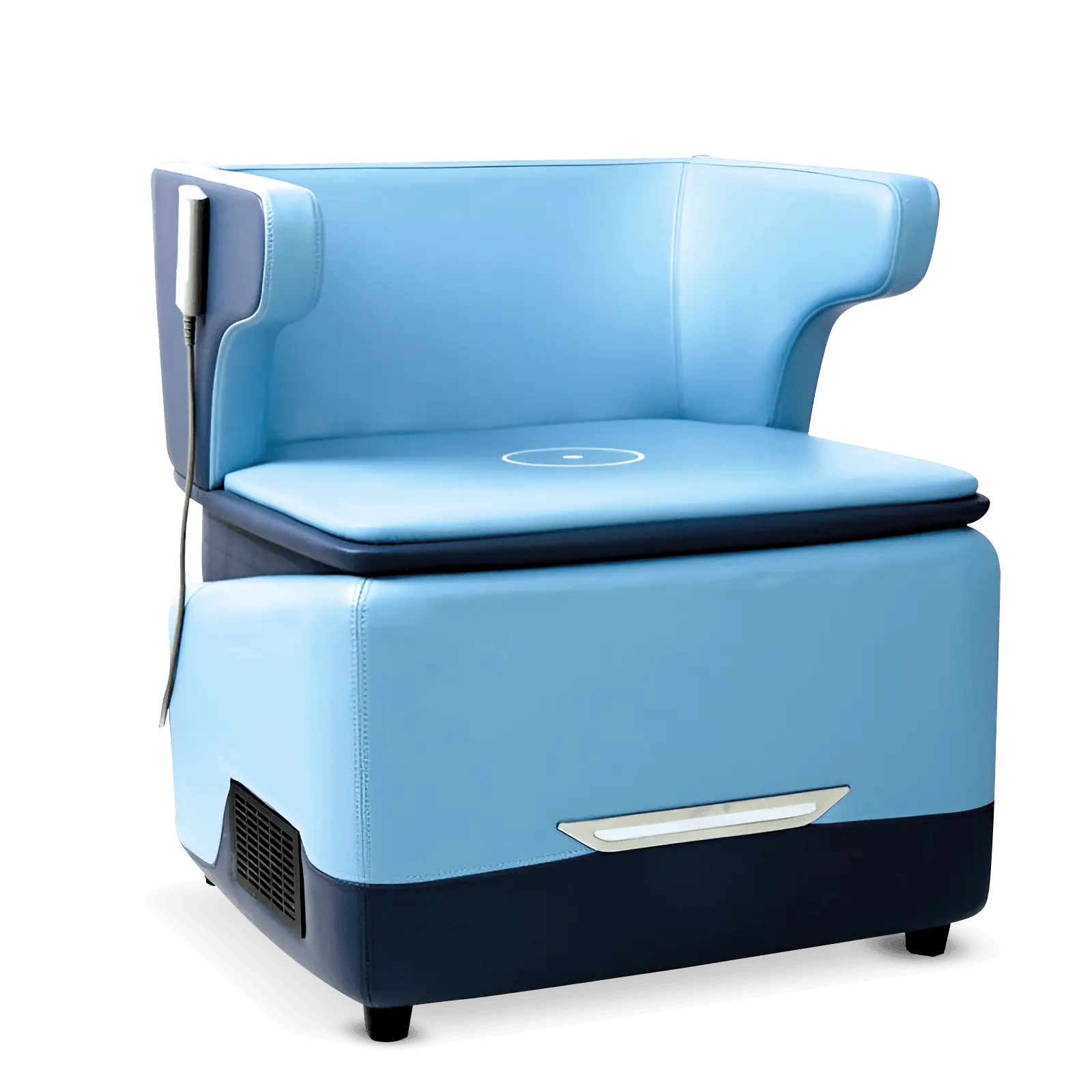
GYNÉBELLE describes ALURA as a pelvic-floor stimulation chair. Consultation explains the available evidence, its limitations and recommended alternatives for your type of leakage. Supervised rehabilitation remains first-line care for stress or mixed incontinence.
Report possible pregnancy, a pacemaker or another implanted device, a metal implant, an intrauterine device, or recent childbirth or surgery. Precautions depend on assessment and the specific model's instructions.
Read the ALURA incontinence page
The ALURA chair available at GYNÉBELLE enables pelvic-floor stimulation while seated. During a postpartum assessment, the clinician can explain how it works, check healing and model-specific precautions, then refer you to rehabilitation or another specialist according to symptoms.
During pregnancy, prioritize prenatal care and suitable exercises. After birth, resuming activities is an individual decision. For stress incontinence, European recommendations reserve electromagnetic stimulation for supervised clinical research. Rehabilitation outcome statistics do not measure the postpartum effects of the ALURA chair.
Medical supervision
The GYNÉBELLE team includes Dr Ines Ben Hassen Hached, a specialist in obstetrics, gynecology and aesthetics. When arranging your appointment, the centre clarifies which professional will assess your needs and may refer you for specialist rehabilitation or another opinion based on the findings.
To monitor change, agree on a concrete goal with the clinician: fewer leaks with exertion, fewer urgency episodes or less disruption to daily activities. A bladder diary and, if indicated, a validated questionnaire can help compare symptoms over time.
Frequently asked questions
Use these pointers to prepare for your consultation.
Read the pelvic-floor FAQIf it persists or interferes with daily life, discuss it during postnatal follow-up. Assessment considers symptom type, childbirth and recovery.
For at least three days, record drinks, toilet visits, urgent sensations and leaks. Bring a list of medications and useful medical reports.
Cochrane figures relate to muscle rehabilitation compared with no active treatment. Magnetic stimulation trials use different protocols and outcome measures. They cannot establish equivalent results for these two approaches.
Duration, number of appointments and cost depend on the assessment and chosen pathway. Ask about appointment arrangements and fees when booking.
If you are pregnant or think you may be, mention this before booking stimulation. Management of leakage in pregnancy centers on prenatal care and, where appropriate, supervised exercises.
Discuss symptoms at your postnatal appointment, or sooner if they concern you. Timing for restarting exercises or considering treatment depends on healing, pain and assessment.
Gynébelle · Ennasr 2, Ariana
Contact the centre to arrange an assessment in Ennasr 2, Ariana. You can describe your symptoms to the professional during the consultation.
Find our address, contact details and opening hours to plan your visit.
Monday to Saturday
9 am – 6 pm
Sunday: closed