01
Urinary incontinence
Leakage during exertion, coughing or laughing may suggest stress incontinence. Leakage associated with a sudden and difficult-to-control urge has a different mechanism. Both may occur together.
Assessment establishes the circumstances, frequency, duration and impact of leakage. It guides decisions about rehabilitation, bladder habits or other appropriate treatments.
Any role for ALURA is discussed after assessment. The same protocol cannot be assumed suitable for every type of incontinence.
Urinary incontinence in women: types of leakage and care
For stress or mixed incontinence, supervised pelvic-floor exercises are first-line care.
02
Pelvic organ prolapse
Prolapse is the descent of one or more pelvic organs. A feeling of heaviness, discomfort or a vaginal bulge requires examination.
Management depends on findings, symptoms and patient preferences. It may include rehabilitation, a pessary or specialist advice.
If stimulation is considered, its objective must be clearly defined. Muscle training must not be confused with anatomical correction of prolapse.
03
Postpartum rehabilitation
After childbirth, urinary leakage, heaviness, changes in sensation or difficulty regaining perineal control may prompt assessment.
Type of delivery, injuries, healing, pain and time since birth are considered. There is no single timeframe suitable for every woman.
ALURA may be considered as an additional option if suitable. It does not replace prescribed pelvic-floor or abdominal rehabilitation.
Abdominal goals can be considered separately. Also explore
SCULPT ELITE, without assuming any additional treatment is necessary.
Vaginal laxity treatment
The sensation of vaginal looseness deserves to be heard. It does not, by itself, establish muscle weakness.
Assessment looks for associated symptoms such as heaviness, leakage, pain, dryness or changes in intimate sensation.
If muscle weakness is identified, support for pelvic-floor function may be suggested. The role of ALURA then depends on assessment and device indications.
05
Pelvic-floor strengthening
Strengthening aims to improve contraction ability when weakness is established. Control and relaxation between contractions also matter.
GYNÉBELLE presents ALURA as a possible method of muscle stimulation. The clinician assesses whether this is appropriate and how to combine it with active exercise.
A stronger contraction does not automatically mean better results. The protocol must consider tolerance and intended function.
06
Improved bladder control
Bladder control involves managing urges and limiting leakage. It does not depend solely on pelvic-floor strength.
Urinary habits, urge patterns and associated symptoms are part of the assessment. A bladder diary may be suggested to better understand the situation.
If ALURA is chosen, progress should be measured using meaningful outcomes: leakage frequency, perceived discomfort and everyday activities.
07
Improved intimate well-being
Intimate well-being can include comfort, confidence during everyday activities and less distress from pelvic symptoms.
It depends on muscles and also on factors including pain, dryness, postpartum recovery and personal circumstances.
Care aims to understand your expectations without reducing intimate health to muscle tone alone. Your experience is part of follow-up.
08
Deep muscle stimulation
In the centre's overview, this means stimulation of pelvic muscles by the electromagnetic device. You may feel contractions during use.
Exact features, settings and procedures depend on the machine. The professional should explain expected sensations and precautions before the first session.
Settings are adjusted to tolerance; seeking the strongest possible stimulation is unnecessary.
09
Neuromuscular rehabilitation
Neuromuscular rehabilitation focuses on motor control and coordination: learning to contract, maintain and then relax muscles at the appropriate time.
Stimulation may be discussed as one tool among others. Exercises, explanations and follow-up remain important for relating muscle work to daily life.
Response is reassessed according to symptoms, tolerance and goals. Lack of progress may lead to a different approach.
10
Core stability
“Core” refers to muscle functions contributing to trunk control. Pelvic-floor work can be combined with breathing and abdominal control in a comprehensive program.
If your concern is posture, returning to activity or abdominal weakness, it merits its own assessment and functional goals.
Pelvic stimulation does not replace movement programs or suitable rehabilitation for those goals.
11
Non-invasive procedure
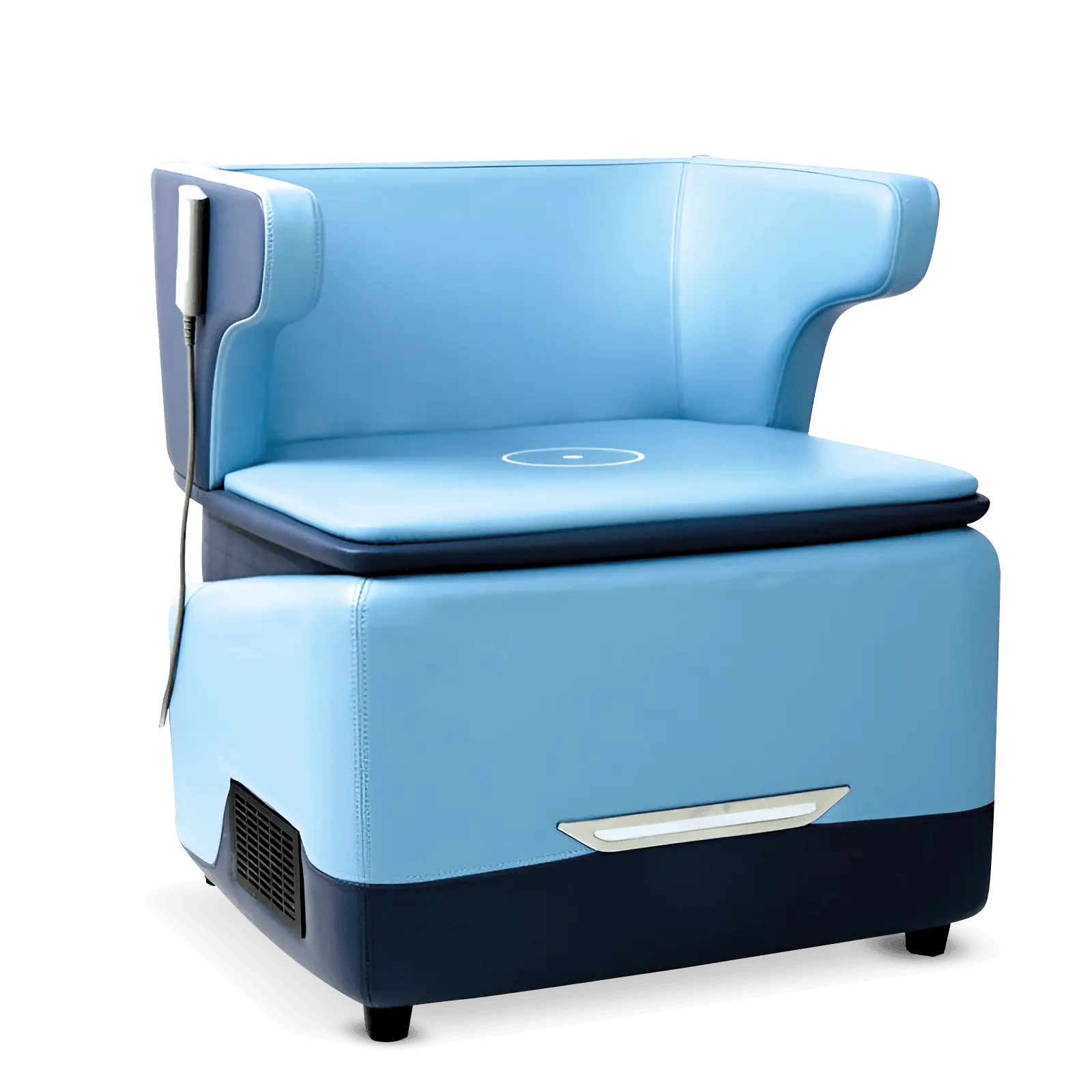
GYNÉBELLE presents ALURA as a non-invasive procedure using a stimulation chair. Positioning and use are explained before the session.
This does not remove the need for assessment or contraindication checks. An implant, pregnancy or certain medical history may affect eligibility.
You can ask about practical arrangements, possible adverse effects and what to do if discomfort occurs.
12
Rapid muscle recovery
The homepage mentions muscle recovery. This goal must be distinguished from a promise of speed: recovery depends on the cause, baseline condition and medical context.
After childbirth or a period of weakness, follow-up aims to assess changes in function and comfort rather than impose one timeframe on everyone.
The protocol may be adjusted or stopped if tolerance or response does not meet expectations.